
Praying Mantis Meaning: The Prophet of Stillness and Precision
Discover the profound spiritual and symbolic meaning of the praying mantis—from ancient Greek oracles to modern steampunk art, exploring the wisdom hidden in stillness, precision, and the art of waiting.
Praying Mantis Meaning: The Prophet of Stillness and Precision
The praying mantis is one of nature's most fascinating contradictions—a creature that appears to be in prayer, yet is one of the most efficient predators in the insect world. Beyond its striking appearance and remarkable hunting abilities, the praying mantis carries profound spiritual and symbolic meaning that spans thousands of years, from ancient Greek oracles to contemporary art and modern life lessons. This article explores the deep wisdom hidden in the mantis's stillness, precision, and the art of purposeful waiting.
The Deception in Its Name: How "Prayer" Masks a Lethal Hunter
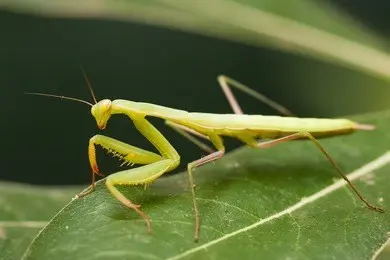
The name "praying mantis" is nature's most elegant deception. Those forelegs, which appear to be hands folded in pious prayer, are actually evolution's perfect killing tools—spiked raptorial limbs that can lock onto prey in just 0.05 seconds, 20 times faster than a human blink.
The Philosophy of Disguised Hunting
What's more profound than the mantis's speed is the survival philosophy hidden in this "disguised hunting." The mantis's motionless posture represents an extreme practice of energy conservation and strategic patience. As the Kalahari Bushmen observe: "Silence isn't inaction; it's ensuring every effort hits its mark."
The mantis teaches us that stillness is not weakness—it's a form of power. By remaining perfectly still, the mantis conserves energy while waiting for the perfect moment to strike. This is a lesson in patience, timing, and the wisdom of knowing when to act and when to wait.
Mastery of Camouflage: Becoming One with the Environment
The mantis's camouflage art has reached unparalleled heights in evolution:
The Malaysian orchid mantis: This remarkable species has evolved petal-like abdominal segments, with its body mimicking orchid blooms so precisely that bees are deceived by its "false floral scent." The mantis doesn't just hide—it becomes the flower itself.
The stick mantis: This species blends seamlessly into tree branches, with its body even replicating the cracks and textures of dry wood. It's not mere mimicry—it's an active survival strategy where the environment becomes an extension of the self.
This camouflage mastery teaches us about adaptation and integration. The mantis shows us that true strength comes not from standing out, but from becoming one with our environment—understanding it so deeply that we can move through it with purpose and precision.
Myths Debunked: The Science Behind "Sexual Cannibalism"
Popular culture has long painted mantises as ruthless lovers, but science has dismantled this narrative, revealing a more nuanced truth about survival and reproduction.
The Research That Changed Everything
A landmark 1984 study by Dr. William Brown revealed a crucial truth: well-fed female mantises never attack males after mating. Sexual cannibalism occurs only when females are severely starved, not as some romantic sacrifice for offspring. This behavior is a survival game, not a moral choice.
A 2021 University of Auckland follow-up study shattered more illusions: male mantises actively fight to escape, with European mantids (Mantis religiosa) evolving "split-second mating" tactics—completing reproduction and fleeing in under a second, boasting a 70% survival rate in the wild.
The Real Lesson: Survival Over Sentiment
In species like the European "nun mantis" (aptly named for its nun-like robes), cannibalism rates hover below 5%. The "insect black widow" stereotype is little more than media exaggeration of lab conditions.
When we judge animal instincts by human morality—calling them "cruel" or "devoted"—we miss the mantis's raw wisdom: every action serves survival, no romantic martyrdom, just rational calculus of hunger and reproduction.
The mantis teaches us to see beyond surface appearances and understand the deeper motivations behind actions. It reminds us that nature operates on different principles than human sentiment, and that survival strategies are often more complex than they first appear.
Symbols Across Civilizations: From Greek Oracles to Sacred Art
The praying mantis has held profound symbolic meaning across cultures and centuries, representing everything from divine prophecy to mechanical precision.
Ancient Greek Reverence: The Prophet Mantis
To the ancient Greeks, the mantis was "Mantis"—the prophet. Its stillness was seen as communion with the divine, and farmers believed it could guide lost children home. The Greeks recognized what modern science confirms: the mantis's ability to remain perfectly still while observing everything around it represents a form of heightened awareness and spiritual connection.
European Folk Traditions: God's Messenger
European peasants called the mantis the "God's messenger" or "penitent nun," its broad, translucent wings resembling a nun's habit. Even the great naturalist Jean-Henri Fabre, in The Insects, marveled at this contrast: "A creature dressed in piety, yet an insect tiger."
This dual nature—appearing gentle and prayerful while being a fierce predator—has fascinated humans for millennia. It represents the balance between spirituality and survival, between contemplation and action.
Art Nouveau and Sacred Symbolism
The mantis's symbolic power inspired some of the most beautiful art of the Art Nouveau period. In 1904, Belgian artist Philippe Wolfers captured the mantis's dual nature in his Art Nouveau pendant design—its delicate body crafted from gold, wings adorned with rubies and diamonds, merging natural elegance with sacred symbolism.
Italian jeweler Romolo Grassi took it further in the 1960s with Mantide Mimetica: a gold mantis with ruby eyes crawling over a quartz-encrusted rock, embodying the insect's raw connection to the earth.
These works reveal a universal truth: the mantis's blend of stillness and ferocity has long mirrored humanity's search for balance between spirituality and survival.
Modern Revelations: Steampunk Art and Digital Age Wisdom
Contemporary artists have reimagined the mantis as a symbol of mechanical precision merged with organic grace, offering new insights into its symbolic meaning.
Steampunk Visions: Precision Meets Nature
Steampunk artists have transformed the mantis into a symbol of harmony between mechanical precision and organic grace:
Mike Libby's creations: Transform real mantis specimens into steampunk marvels, adding brass gears and springs that make the insect look like a retro-futuristic machine. These works highlight the mantis's mechanical precision—its movements are so precise they seem almost robotic.
Daniel Proulx's copper wire creations: Crafted from antique clock parts and green glass eyes, these pieces highlight the mantis's predatory focus—its spiked forelegs reimagined as saw-like cogs. The mantis becomes a metaphor for intentional action in a chaotic world.
These artistic interpretations subvert the "foolhardy" stereotype from Aesop's fables. Instead of a creature vainly challenging chariots, the mantis becomes a symbol of precision, purpose, and the integration of natural wisdom with human innovation.
The Mantis's Visual System: A Lesson in Panoramic Awareness
The mantis's visual system offers profound modern resonance. Its compound eyes capture 180 degrees of motion, providing "panoramic awareness" that's rare in our fragmented digital lives.
We scroll through endless information, reacting impulsively, while the mantis teaches an ancient lesson: "Every move must be deliberate." The mantis doesn't just see—it observes, processes, and acts only when the moment is right.
Spotting a mantis on your windowsill isn't chance—it's a reminder to pause, observe the whole picture, and act with purpose. In an age of constant distraction, the mantis teaches us the value of focused attention and deliberate action.
Life Lessons in an Egg Case: The Mantis's School of Independence
Mantis wisdom begins before hatching, offering profound lessons about independence, resilience, and the importance of early challenges.
The Ootheca: Nature's Bulletproof Vest
Female mantises deposit eggs in a frothy structure called an ootheca, which hardens into a "natural bulletproof vest"—resistant to subzero temperatures and predator bites. This protective structure represents the importance of creating strong foundations and preparing for challenges before they arrive.
Independence from Birth
When nymphs emerge, there's no maternal care: they immediately hunt aphids, even fending off siblings. This brutal training ensures only the sharpest survive to adulthood. A nymph learning to catch flies today becomes a hunter capable of taking down lizards tomorrow.
It's a stark contrast to modern coddling. The mantis doesn't shield its young from struggle; it lets survival forge their strength. For humans, this is a powerful metaphor: resilience isn't built in comfort, but in navigating the small, daily challenges that sharpen our instincts.
The Lesson of Early Adversity
The mantis teaches us that early challenges, rather than being harmful, are essential for developing strength and independence. By facing difficulties from the beginning, the mantis nymphs develop the skills and resilience needed to survive in a competitive world.
Spiritual Meaning: What the Mantis Represents
When the praying mantis appears in your life, it carries specific spiritual messages and guidance:
Patience and Timing
The mantis is the ultimate teacher of patience and perfect timing. It teaches us that waiting is not weakness—it's strategic strength. The mantis reminds us to observe, plan, and act only when the moment is exactly right.
Stillness and Meditation
The mantis's motionless posture represents stillness, meditation, and inner peace. When the mantis appears, it may be encouraging you to slow down, find stillness, and connect with your inner wisdom.
Precision and Focus
The mantis's ability to strike with perfect precision teaches us about focus, concentration, and the power of deliberate action. It reminds us that every action should be purposeful and well-aimed.
Observation and Awareness
The mantis's panoramic vision represents heightened awareness and the ability to see the bigger picture. It encourages us to step back, observe our surroundings, and understand situations from multiple perspectives.
Balance Between Contemplation and Action
The mantis embodies the perfect balance between spiritual contemplation and practical action. It appears prayerful and peaceful, yet is ready to act with precision when needed. This teaches us to balance our inner spiritual life with effective action in the world.
When the Mantis Visits: Practical Guidance
If a praying mantis has appeared in your life (through sightings, dreams, or intuitive guidance), here's what it may be signaling:
Time to Wait and Observe
- Slow down: The mantis may be encouraging you to pause, observe, and wait for the right moment before taking action
- Gather information: Take time to understand the full situation before making decisions
- Trust your timing: The mantis teaches that perfect timing is more important than speed
Need for Precision
- Focus your efforts: The mantis encourages you to be precise and deliberate in your actions
- Avoid scattered energy: Concentrate your efforts on what truly matters
- Aim carefully: Every action should be purposeful and well-directed
Spiritual Connection
- Find stillness: The mantis may be calling you to meditation, prayer, or quiet contemplation
- Connect with the divine: Its prayerful posture reminds us of the importance of spiritual connection
- Balance inner and outer: Find harmony between your spiritual practice and practical life
Independence and Self-Reliance
- Trust your abilities: The mantis teaches independence and self-reliance
- Face challenges directly: Don't avoid difficulties—they build strength
- Develop your skills: Like the mantis nymph, learn through practice and experience
Working with Mantis Energy
If you feel drawn to mantis energy, here are practical ways to connect:
Meditation practice: Spend time in stillness, observing without reacting. Practice the mantis's art of waiting and watching.
Nature observation: Spend time in nature, especially in gardens or natural areas where mantises are common. Observe their behavior and reflect on the lessons they offer.
Timing awareness: Pay attention to timing in your life. Practice waiting for the right moment before taking action.
Precision practice: Focus on doing things with greater precision and attention to detail. Avoid rushing or acting impulsively.
Camouflage wisdom: Learn to adapt to your environment while maintaining your core identity. Understand when to stand out and when to blend in.
The Mantis's Ultimate Message
The praying mantis's deepest spiritual teaching is about the integration of stillness and action, contemplation and precision. It teaches us that:
- Stillness is not inaction—it's strategic waiting and energy conservation
- Patience is not weakness—it's the wisdom of perfect timing
- Observation is not passivity—it's gathering information for precise action
- Precision is not hesitation—it's ensuring every effort hits its mark
The mantis is not a gentle guide—it's a fierce teacher of discipline, focus, and the art of purposeful waiting. When the mantis appears in your life, it's asking you to slow down, observe carefully, and act with precision when the moment is right.
In essence: The praying mantis is a complex and powerful spiritual guide that challenges us to find balance between stillness and action, between contemplation and precision. It teaches us that true power comes from patience, observation, and the wisdom of perfect timing. By working with mantis energy, we can develop greater focus, improve our timing, and navigate life's challenges with the precision and purpose that the mantis embodies.
Discover Your Spirit Animal
The praying mantis's spiritual wisdom reminds us that each person has a unique spirit animal that reflects their inner nature and life path. Whether you're drawn to the mantis's message of patience and precision, or feel called to explore other animal guides, discovering your personal spirit animal can provide profound insights into your authentic self.
Our Spirit Animal Quiz uses a scientifically designed questionnaire to analyze your personality traits, values, and behavioral patterns, helping you identify which animal spirit guide resonates most deeply with who you truly are.
__BOLD_0__ to uncover your personal spirit animal and learn how its unique wisdom can guide you toward greater patience, precision, and purposeful action in your daily life.